Draft National Bioresources Strategy
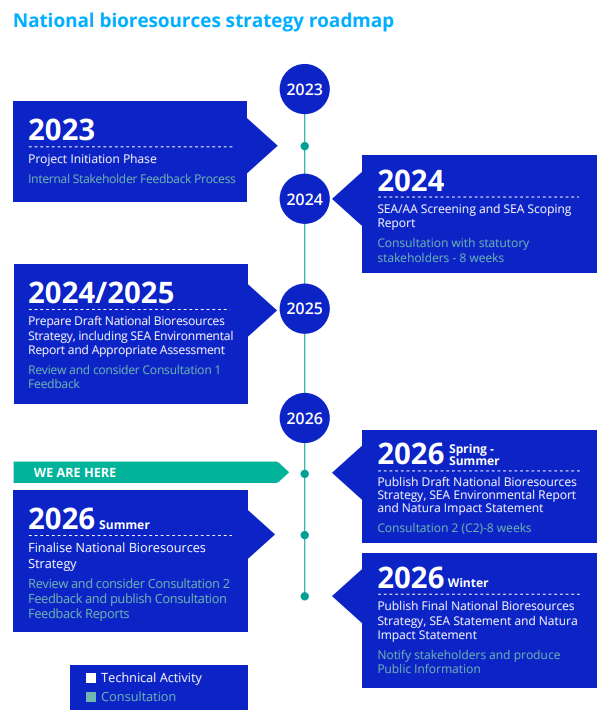
Uisce Éireann held an eight week public consultation on it’s Draft National Bioresources Strategy and accompanying Strategic Environmental Assessment (SEA) Environmental Report and Natura Impact Statement (NIS). The consultation closed on the 22 July 2026.
Thank you to everyone who took the time to make a submission and provide feedback.
All submissions and observations received during the consultation period will be reviewed and taken into consideration as the National Bioresources Strategy is finalised. A Public Consultation Report summarising the feedback received will be published over the coming months.
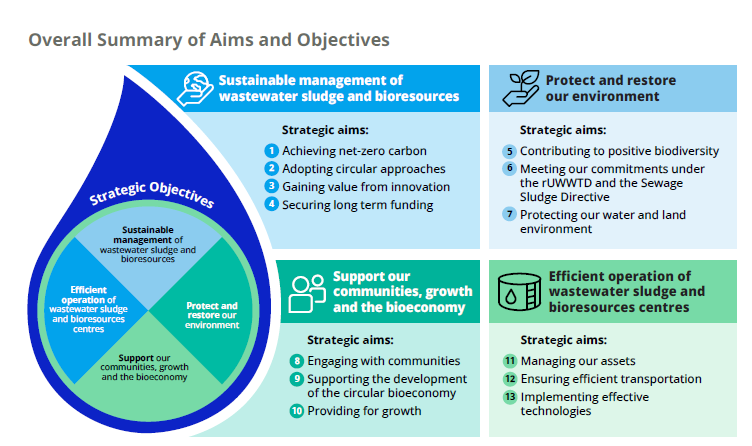
The draft National Bioresources Strategy set out Uisce Éireann’s long term strategic approach to managing wastewater sludge and bioresources. The document included four key strategic objectives and how we plan to achieve them.
Sustainable and efficient wastewater sludge and bioresource management is needed to:
- Support our growing population and economy
- Protect human health and our environment, and
- Contribute to a circular economy and net zero carbon ambitions.
The draft National Bioresources Strategy considered our future needs and identifies capital investment requirements over the next 25 years in the context of both the opportunities and the challenges we are likely to face.
The consultation is now closed but the draft documents can be viewed below.
View and download the consultation documents
Why is the National Bioresources Strategy needed?
Following the public consultation on the draft National Bioresources Strategy and adoption by the Uisce Éireann Board the National Bioresources Strategy will:
- Set out a nationwide standardised approach for sustainably managing wastewater sludge and bioresources.
- Ensure compliance with legislative and regulatory requirements including the recast Urban Wastewater Treatment Directive (rUWWTD), the Sewage
- Sludge Directive (SSD) and the Code of Good Practice for the use of Biosolids in Agriculture.
- Support the objectives of Uisce Éireann’s Water Services Strategic Plan (WSSP) 2050.
- Inform future capital and operational activities in relation to sustainable bioresources management in Ireland.
- Support future resilience and progresses actions to implement new and alternative methods to managing wastewater sludge and bioresources.
Supporting the bioeconomy
Supporting the bioeconomy
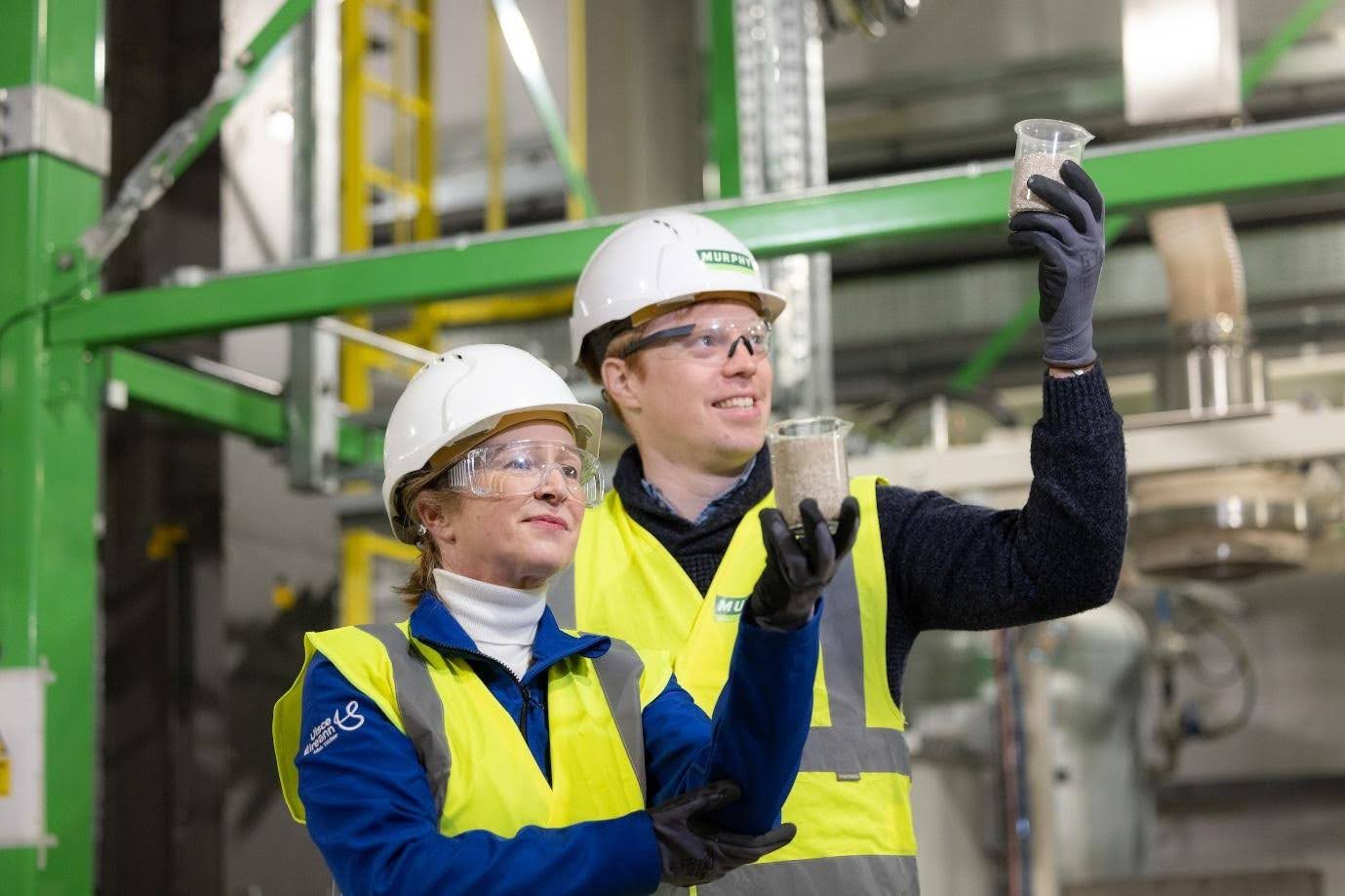
Wastewater sludge treatment can contribute to the bioeconomy through the bioresources that are recovered through the treatment processes. These include:
What’s included in the draft National Bioresources Strategy?
The draft National Bioresources Strategy identified four strategic objectives.
Accompanying these objectives are thirteen strategic aims that will help us to address our most critical investment needs, respond to emerging policy and regulatory changes and align with our core principles of circular economy, energy neutrality, net zero carbon, and sustainability. The draft NBioS presents 35 actions which set out how we propose to achieve our strategic objectives.
Looking ahead
The draft National Bioresources Strategy looks ahead and considers the changing landscape we operate in and how this might change how wastewater sludge and bioresources are managed. We have considered overall challenges faced by Uisce Éireann such as climate change, growing population and economy, environmental and biodiversity crises, ageing infrastructure, legislation, and economic conditions. We have also considered challenges specific to wastewater sludge and bioresources, including:
Next steps
All submissions and observations received during this public consultation will be taken into consideration and will be documented in the Public Consultation Report.
Once adopted by the Uisce Éireann board, the final National Bioresources Strategy will be published alongside the Strategic Environmental Assessment (SEA) Statement and Appropriate Assessment (AA) Determination in Quarter 4 of 2026.
The final National Bioresources Strategy will undergo regular reviews, at least every five years, or as required by legislation. These reviews will allow us to adapt to any changing circumstances or needs. Updates to the final National Bioresources Strategy will be informed by any future changes in relevant legislation or government policy.